Dendrobium Secundum Illustration: A Practical Evaluation
The Dendrobium Secundum Illustration represents a specific niche within the broader category of botanical art. Often referred to as the "Toothbrush orchid" due to its distinctive flower shape, this plant has long been a subject of scientific and artistic interest. For creators, designers, and crafters, the availability of high-quality digital reproductions of such illustrations offers a versatile resource for various projects. This evaluation examines the utility, technical specifications, and appropriate applications of a Dendrobium secundum illustration to help you determine if it meets your specific design needs.
Understanding the Subject and Format
A Dendrobium Secundum Illustration is typically a reproduction of a vintage or classic botanical drawing. These images are characterized by their precision, attention to anatomical detail, and often, a muted color palette that reflects the style of historical scientific documentation. Unlike modern photography, which captures a single moment in time with all its imperfections, a botanical illustration distills the essential characteristics of the orchid into a clear, educational, and aesthetically pleasing format.
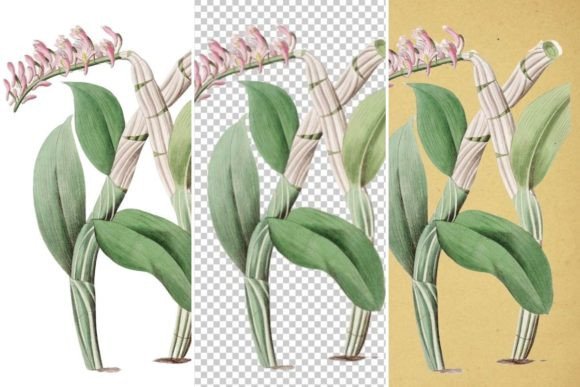
When considering a digital version of this artwork, the product usually arrives as a set of files designed for immediate use. Standard offerings include a PNG file with a transparent background, a JPG with a white background, and a JPG placed on a vintage-style textured background. The dimensions are typically standardized to 8.5 x 11 inches (21.6 x 27.9 cm) with a resolution of 2550 x 3300 pixels at 300 PPI. These specifications ensure that the image is suitable for high-quality printing without pixelation, making it a robust option for physical crafts as well as digital layouts.
Reasons for Interest in Botanical Clipart
There are several practical reasons why an individual might seek out a Toothbrush orchid illustration. First, the aesthetic appeal of vintage botanical art is timeless. It brings a sense of history and elegance to modern designs, bridging the gap between contemporary trends and classic styles. Second, the clarity of these illustrations makes them ideal for educational materials where identifying features of the plant are necessary.
Furthermore, the versatility of the file formats provided addresses common workflow bottlenecks. Having a transparent PNG allows designers to overlay the orchid onto complex backgrounds without awkward white borders. Conversely, the white background JPG serves as a clean, standalone element for documents that require a simple, paper-like appearance. The inclusion of a vintage background option provides a ready-made context for those who wish to maintain a cohesive antique look without needing to source additional textures.
Benefits and Technical Considerations
The primary benefit of purchasing a high-resolution Orchid illustration is the quality assurance. At 300 PPI, the image is optimized for print media. This resolution is critical for projects like invitations, scrapbook pages, or framed prints where low-resolution images would appear blurry or jagged upon close inspection. The "Instant Download" nature of the product also eliminates shipping costs and wait times, allowing for immediate integration into ongoing projects.
However, there are tradeoffs to consider. While the image is digitally enhanced and extracted from its original background, it remains a static raster image. If a project requires extreme resizing—such as scaling the image up to billboard size—the resolution will eventually become insufficient. Additionally, while the colors are vibrant and accurate to the original illustration, they may not match the exact hue of a living Dendrobium secundum in every lighting condition. Users should view this as an artistic interpretation rather than a photographic reference.
Another consideration is the licensing scope. As a digital download, the rights to use the image are governed by the terms of the seller. While generally suitable for personal crafts and small-scale commercial uses like wedding invitations, large-scale commercial reproduction may require different permissions. It is essential to verify the license agreement before using the image for extensive commercial ventures.
Ideal Use Cases
This Colored botanical illustration is a strong fit for several specific scenarios:
- Invitations and Stationery: The elegant lines of the Toothbrush orchid work exceptionally well on wedding invitations, baby showers, or formal event cards. The vintage aesthetic adds a touch of sophistication that complements script typography and cream-colored paper stocks.
- Scrapbooking and Collages: Crafters can utilize the transparent PNG to layer the orchid over photos or patterned papers. The high resolution ensures that when printed on standard photo paper or cardstock, the details remain crisp.
- Home Decor and Prints: The 8.5 x 11-inch format is perfect for framing. Whether used as a standalone piece or part of a gallery wall of botanical prints, the image functions well as an ornamental plant depiction for interior design.
- Digital Design Elements: Graphic designers can incorporate the illustration into website headers, blog posts about gardening, or digital planners. The clean extraction from the background facilitates seamless integration into digital compositions.
When Alternatives May Be Preferable
While the Dendrobium Secundum Illustration is versatile, it may not be the optimal choice for every project. If a design requires a realistic, three-dimensional rendering of the orchid, a high-definition photograph or a 3D model would be more appropriate. Illustrations, by nature, flatten depth and rely on line work and shading to convey form, which may not suit hyper-realistic themes.
Additionally, if the project demands vector scalability, a raster-based PNG or JPG is insufficient. Vector graphics (such as SVG or EPS files) can be resized infinitely without loss of quality. If the intention is to create merchandise that requires the image to be stretched across varying sizes (e.g., t-shirts, mugs, and banners), seeking a vector version of the illustration would be a wiser decision.
Finally, consider the color palette requirements. Vintage illustrations often feature sepia tones, faded greens, or muted pinks. If a project requires bold, neon, or highly saturated modern colors, this specific illustration might require significant color correction in editing software, which could alter the integrity of the original art. In such cases, sourcing a modern, stylized vector graphic might save time and effort.
Decision-Making Insights
To determine if this digital product aligns with your goals, evaluate the final output medium first. If the end result is a printed item on standard paper sizes (letter or A4), the 300 PPI resolution is ideal. If the output is purely digital for web use, the file size might be larger than necessary, though it ensures maximum quality across high-DPI screens.
Next, assess the design complexity. If you need to place the orchid over a busy background, the transparent PNG is indispensable. If you are creating a document where the image sits on a blank page, the white background JPG simplifies the process. The vintage background option is best reserved for projects aiming for a specific nostalgic theme without additional design work.
Ultimately, the Dendrobium Secundum Illustration serves as a high-quality, practical asset for those valuing the charm of botanical art. It balances historical accuracy with modern digital convenience. By understanding its strengths in print resolution and format variety, alongside its limitations regarding scalability and realism, you can make an informed decision on whether it fits your creative vision. For projects requiring elegance, clarity, and a touch of vintage character, this illustration remains a compelling choice.